
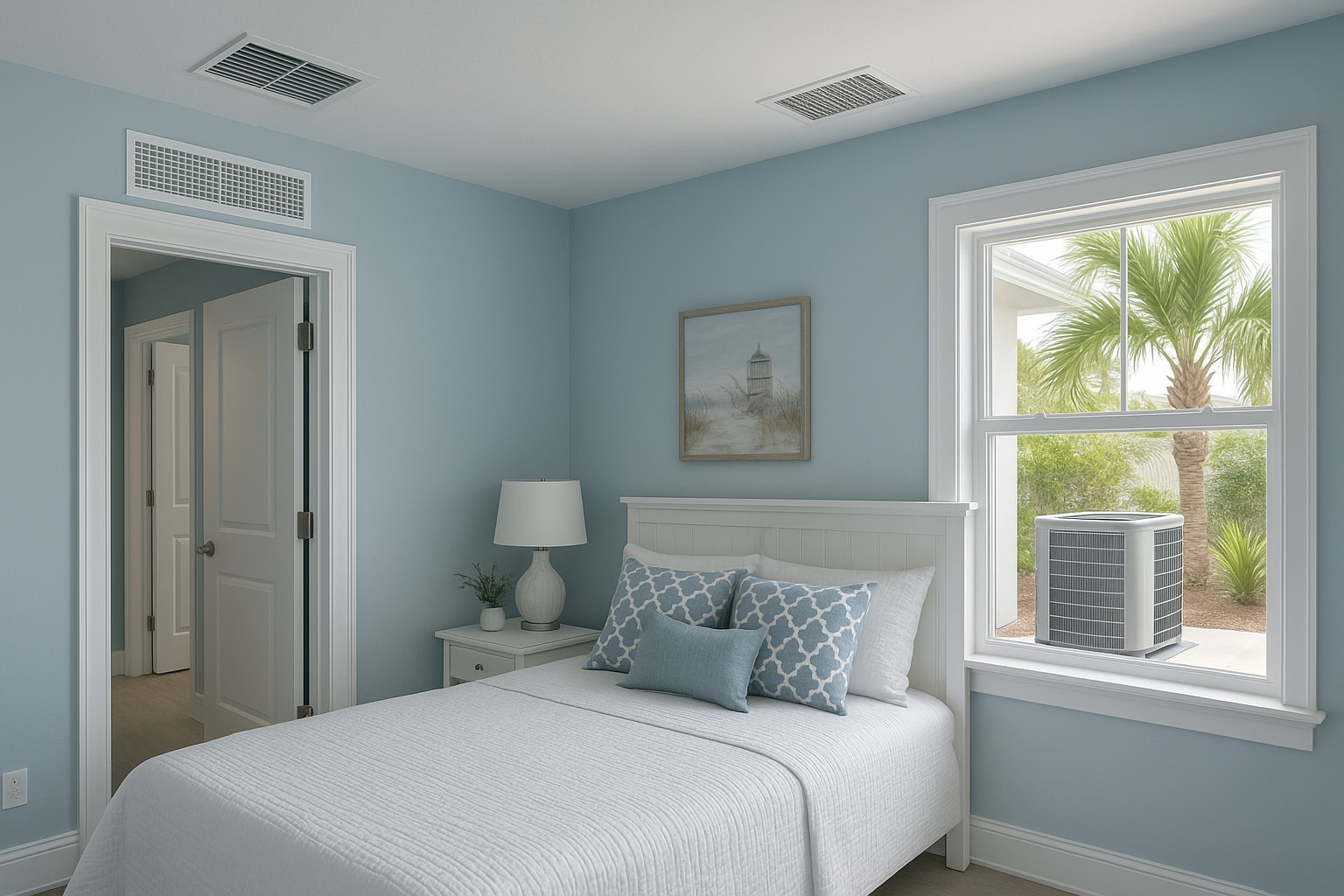
Living near the Gulf brings sea breezes, sunshine, and a few unique HVAC challenges. Coastal humidity, salt air, and year-round cooling loads can work against both comfort and indoor air quality. The good news is that a few smart choices and consistent care go a long way toward healthier air and a longer-lasting system.
Humidity and Salt Air: Why Coastal Homes Need Extra Attention
West Central Florida’s humidity increases the workload on your air conditioner. Your system does two jobs at once. It cools the air and it removes moisture. When humidity is high, the AC must run long enough to condense moisture on the cold evaporator coil and drain it away. If the system is oversized or the fan runs too often between cycles, it may not remove enough moisture, which can leave rooms clammy and push indoor humidity higher than you would like.
Salt air is another coastal factor. Salt particles can settle on outdoor coils and metal fasteners. Over time, this can speed up corrosion and reduce heat transfer efficiency. Keeping the outdoor unit clean and inspected helps protect your investment.
Filtration That Fits Florida Living
A good filter helps your system and your air. Look for a filter that captures common household dust and debris without restricting airflow. Many homes use a filter in the MERV 8 to MERV 11 range. If you are considering a higher-rated filter, make sure your system is designed for it, since too much resistance can reduce airflow and comfort.
Replace filters regularly. In coastal areas with more airborne particles and longer cooling seasons, that often means checking the filter monthly and replacing every one to three months. Homes closer to the beach or with pets may need more frequent changes. Always install the filter with the airflow arrow pointing toward the air handler, and make sure the filter slot or grille seals well so air cannot bypass the filter.
Ductwork and Air Sealing Matter
Leaky or poorly insulated ducts are a common source of indoor air quality and comfort problems. Duct leaks can pull hot, humid, and dusty air from attics or garages into your return, which makes your system work harder and can lead to uneven temperatures. Insulation that is damaged or missing can also cause ducts to sweat and create moisture problems around the system.
A professional duct inspection looks for disconnected runs, crushed flex duct, air leaks at boots, and inadequate insulation. Sealing with mastic, repairing damaged sections, and balancing airflow can improve comfort and help control humidity. Even a well-tuned HVAC system struggles if the ducts are not right.
Preventing Biological Growth
Keeping surfaces dry and air moving appropriately is key. Many homes feel most comfortable when indoor relative humidity stays around the mid-forties to mid-fifties. You can help your system by setting the thermostat fan to Auto rather than On, which allows moisture to drain off the coil instead of being blown back into the ducts between cycles. Make sure supply registers and returns are not blocked by furniture, and keep the condensate drain clear so water leaves the home as intended.
Good filtration, clean coils, and regular maintenance reduce conditions that allow growth on HVAC surfaces. Some homeowners choose add-ons that are designed to keep the inside coil cleaner, but these should be matched to the system and maintained properly. Focus first on airflow, drainage, filtration, and indoor humidity control.
Ventilation the Smart Way
Fresh air is important, but in Florida it needs to be managed to avoid bringing in too much moisture. Run bathroom and kitchen exhaust fans during and after showers and cooking, and make sure they vent outdoors. If your home is tight or you are planning improvements, ask about controlled fresh air strategies that filter and temper incoming air so your system does not fight excessive humidity. Energy recovery ventilators can be a good fit in many coastal homes when sized and set up correctly.
Corrosion Defense for Outdoor Equipment
Salt and sand can collect on the outdoor coil and cabinet. Rinse the outdoor unit gently with fresh water periodically to remove salt residue. Do not use a high-pressure washer, since it can bend coil fins. Keep at least two feet of clearance around the unit, trim foliage, and clear grass clippings after mowing. During maintenance visits, ask your technician to check for early signs of corrosion, clean the coil, and confirm that electrical connections and fasteners remain secure. In harsher coastal pockets, specialized protective coatings may be recommended for new equipment or during coil replacements.
Comfort Tips You Can Use Today
- Use Auto fan mode instead of On to improve dehumidification during cooling cycles.
- Avoid large day-to-day thermostat setbacks in summer. Big swings can add moisture back into the home when the system is off for long periods.
- Run ceiling fans when rooms are occupied to help you feel cooler at the same temperature set point.
- Keep windows and exterior doors closed during the most humid parts of the day. Coastal breezes can carry in more moisture than you think.
- Fix plumbing drips, seal around dryer vents and wall penetrations, and use bath and kitchen exhaust to remove moisture at the source.
- Place a simple hygrometer in a central area so you can see how indoor humidity responds to weather and system settings.
- Do not enclose or cover the outdoor unit. Shade is fine as long as airflow remains clear on all sides and above.
Maintenance Makes the Difference
Coastal systems benefit from consistent, professional care. A typical maintenance visit includes cleaning or replacing filters, checking airflow, cleaning indoor and outdoor coils, clearing the condensate drain, inspecting electrical components, measuring refrigerant pressures within manufacturer guidelines, and assessing duct condition. Regular attention helps catch small issues before they affect comfort or lead to bigger repairs.
If you live along the Pinellas or Pasco coastline, our team services and maintains systems in your area. Learn more about HVAC maintenance in Clearwater and full HVAC services in St. Petersburg. For ongoing tune-ups and reminders, explore our Comfort Airz Care Plans to help keep your system clean and running smoothly through the long cooling season.
The Bottom Line
Indoor air quality along the coast depends on moisture control, clean filtration, healthy ducts, and steady ventilation. Combine those with corrosion-aware maintenance and a few daily habits, and you will feel the difference in comfort and in the way your HVAC system performs.
Have questions about humidity, filtration, or whether your ducts need attention? We are happy to help. Contact Comfort Airz to schedule a visit or request advice for your home.